
Cash Deposit Safes: How They Work and How to Choose One
Posted by Jim on 20th Dec 2025
Cash Deposit Safes: How They Work and How to Choose One
Drawer, slot, rotating drum or chute - how takings go in without the safe being opened, and how to pick the right one.
In this guide
- How a cash deposit safe works
- Drawer, slot, drum or chute
- Our deposit safes
- Inner compartments and second locks
- Cash ratings, burglary and fire
- How to choose one
- Bolting it down and installation
- Questions about deposit safes
A cash deposit safe keeps the day's takings out of the till and away from staff who do not need access. Anyone on shift can put cash in; only the people you give the code - or the key - can take it out.
How a cash deposit safe works
Staff drop cash and envelopes in without opening the safe. An anti-fishing design - a toothed plate, a toothed edge, a baffle or a rotating drum - stops anyone reaching back in for them. The door stays locked, and only the people you give a code open it.

Less cash sits in the till during a shift, fewer people can reach the takings, and a hold-up or a dishonest moment finds far less to take.
Drawer, slot, drum or chute
 A deposit drawer
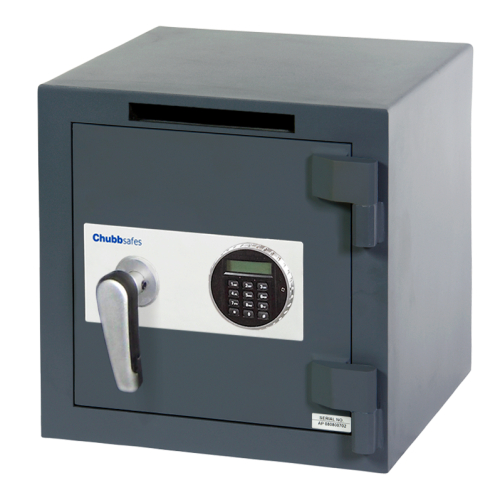
Pull the drawer down, drop the deposit in, close it - the deposit falls into the safe. The Dominator DD has a toothed anti-fishing plate at the back of the drawer; the DS-D's drawer feeds a key-lockable compartment; the Chubb Drawer Trap MKII has an anti-fishing deposit drawer with its own key lock.
A deposit slot
Notes and envelopes are posted through a slot. The Dominator PSD-1 has a front-mounted slot above the door and the UC under-counter safes a slot at the top of the front, each with a toothed edge behind it; the Secuguard CS100K has a 100 x 15 mm posting slot with a baffle, and the CS252 a 160 x 15 mm slot with a jagged-teeth baffle device. The Chubb E-Slot has a slot above the door, and the Chubb ACU350 is an under-counter unit that takes banknotes through a note slot.
A rotating drum
On the Dominator TD-1 and TD-2, staff place the deposit in the rotary drum on top and turn the handle to drop it into the safe - a design that resists fishing far better than an open slot.
A deposit chute
The Secuguard AP520SET and the three AP7038 models take deposits through a chute at the top.
Our deposit safes
Dominator and Chubb
Sizes are height x width x depth. Every cash figure is the maker's guideline for your insurer.
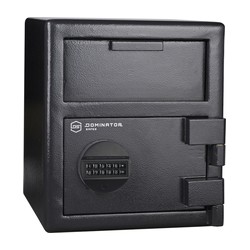
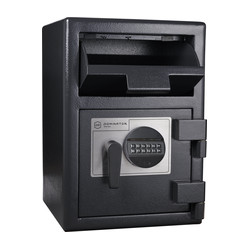
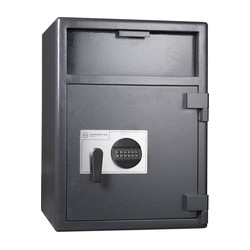
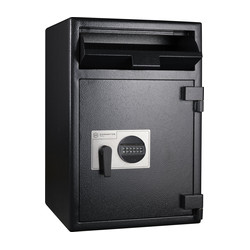
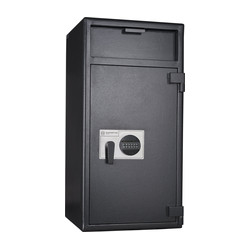
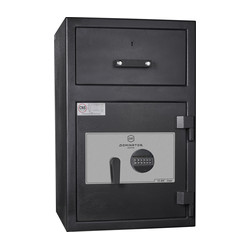
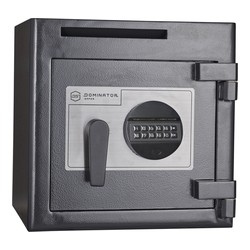
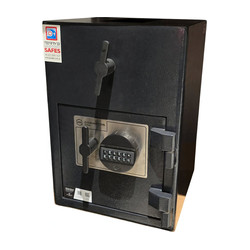
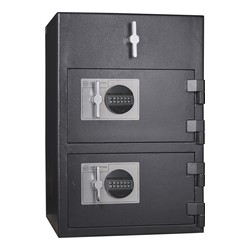
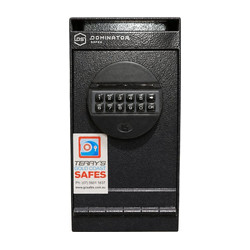
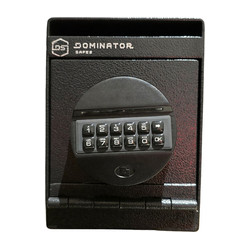
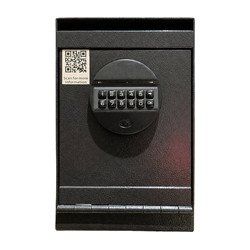
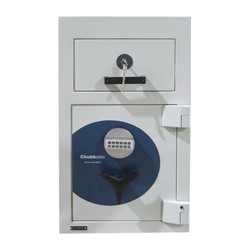
The Dominator deposit safes open with a Tecnosicurezza Pulse 2 keypad (the TD-2 has one on each door). The Chubb E-Slot - 12 mm solid steel, 32 L, 75 kg - carries a cash rating of up to $5,000 (insurer guideline), and the ACU350 holds up to 350 banknotes behind two cylinder key locks, at 2.4 kg - one key releases it from the counter, so it can be carried to the back office to be emptied. The Chubb deposit safes are usually a special order.
Secuguard
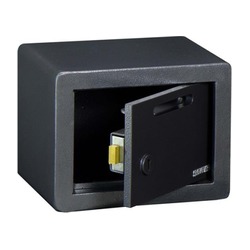
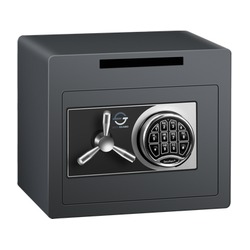
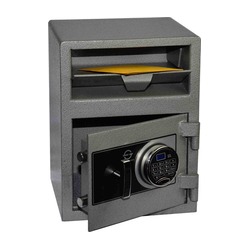
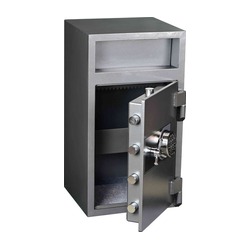
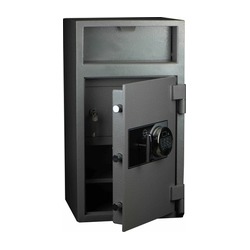
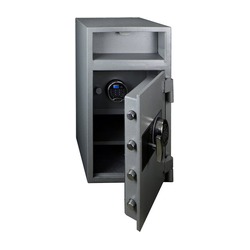
The AP7038SEE is kept in stock and on display at Burleigh; the AP7038SE and AP7038SEK are usually a special order.
Browse all our cash deposit safes.
Inner compartments and second locks
Some deposit safes split who can reach what:
- Dominator DD-3 and DD-5: a dual-keyed internal compartment.
- Dominator DS-D: the deposit drawer feeds a key-lockable compartment.
- Chubb Drawer Trap MKII: a keypad on the main door and a key lock on the deposit drawer.
- Dominator TD-2: a keypad on each door.
- Secuguard AP7038SEK and AP7038SEE: an inner compartment - key-locked on the SEK, with its own digital lock on the SEE.
Many keypads can also be set with a time delay to slow down a hold-up - time delay.
Cash ratings, burglary and fire
- Cash ratings are the maker's guideline for your insurer, and the insurer has the final say - how insurers use them, and what "unsupported" means.
- Burglary: the DS-D is UL-RSC certified, and the Chubb Drawer Trap MKII is approved by Sold Secure to Gold Standard. The other Dominator deposit safes are steel deposit safes with no third-party certificate.
- Fire: only the DS-D adds fire protection for paper - 105 minutes, certified to CNS. The rest are not rated to protect paper or data in a fire (what a fire rating means).
- Relockers: the DD, PSD, TD and UC have a relocking device in the case, and the DS-D and Drawer Trap MKII a glass relocker - what relockers do.
How to choose one
- How much cash sits in it between bankings? Ask your insurer what it accepts, and choose a safe whose cash rating covers it.
- Who drops, who opens? Staff need the drop; only the people who empty it need the code - or a second lock for an inner compartment.
- Where will it go? Under a counter, the UC-1 is 150 mm wide; a TD with a drum on top needs the top clear.
- Does it need a fire rating? If it also holds paper records, the DS-D is the deposit safe with one.
- How big are the deposits? Envelopes and notes suit a slot; bulkier bags suit a drawer or a chute.
For the rest of a business's safes - drug, records, data, keys - see choosing a safe for your business.
Bolting it down and installation
A deposit safe that is not bolted down can be carried away with the takings inside. The Dominator deposit safes have four internal bolt-down holes, and an anchored safe is far harder to remove - insurers often expect it.
We install safes on the Gold Coast and in the Tweed Shire, and deliver to East Coast destinations as well. Delivery and installation are priced by weight and site access - see Delivery and Installation. Have it serviced regularly too - the signs a safe needs servicing.
The brands in this guide


FAQ
 How does a cash deposit safe work?
Staff put cash in through a drawer, slot, rotating drum or chute without opening the safe, and an anti-fishing design stops it being taken back out. Only the people with the code or key open the door.
Which deposit safe has a fire rating?
The Dominator DS-D - 105 minutes for paper, certified to CNS - and it is UL-RSC certified for burglary too.
Can staff open it?
Only if you give them the code. Staff who only need to drop cash in do not need it - that is the point of a deposit safe.
Does a deposit safe need to be bolted down?
Yes - an anchored safe is far harder to remove, and insurers often expect it. The Dominator deposit safes have four internal bolt-down holes.
How much cash can I keep in it?
As much as your insurer accepts for that safe. A cash rating is the maker's guideline for the insurer, not a guarantee.
Related Guides
Choosing a deposit safe?
Tell us how much cash you hold between bankings, who drops it and where the safe will go. We will recommend the model and how to fix it.
 Ask an Expert
Terry’s Gold Coast Safes
2 Prosper Crescent
Burleigh Heads, QLD 4220
Showroom display stock, free pickup, and installation on the Gold Coast and in the Tweed Shire. Visit our showroom